
Top Solar Water Heater Systems for Hotel Projects: 5 Verified Picks
Solar water heater systems for hotel projects are judged by a different standard than residential systems. A hotel does not need hot water occasionally — it needs a predictable daily volume for guest bathrooms, public bathing areas, kitchen and laundry use, delivered at a stable temperature and pressure regardless of the weather. The same solar geyser that performs well on a family roof can fall short in a 60-room property within a single season if storage volume, pressure rating or backup heating is specified wrongly.
This guide ranks five solar water heater and solar collector configurations for small and medium-sized hotels, from roughly twenty to one hundred rooms. Every pick is drawn from documented product configurations and operating evidence rather than from catalogue claims, and each is assessed against four hotel-specific requirements: verified configuration data, all-day domestic hot water (DHW) capability, integration with auxiliary heating for cloudy periods and peak load, and long-term operating cost.
The reference case used throughout is a documented hotel solar thermal installation in Southeast Asia, where an evacuated-tube system with auxiliary heating reduced electricity and gas costs by more than 40% and has continued to operate stably for more than 15 years. Configurations that cannot reproduce that pattern at hotel scale are not on this list.
What a Hotel Hot Water System Has to Deliver
Hotel domestic hot water demand is continuous, and it is not flat. The load rises sharply in the early morning, when guests shower before check-out and breakfast, and again in the late evening. A solar water heater system sized only against the daily average will be short at exactly the two moments when a hotel cannot afford to be short.
Five requirements separate a hotel-grade configuration from a residential one:
- Continuous availability, independent of weather. Solar thermal systems in hotel service are normally specified with auxiliary heating — electric heaters or heat pumps — that covers cloudy periods and tops up the peak. A configuration without a defined backup strategy is not a hotel system.
- Storage volume matched to peak draw, not to collector output. Collector area and tank volume are separate design decisions. Storage tanks and buffer tanks absorb the mismatch between midday generation and evening draw.
- Distribution pressure for multi-storey buildings. Guest bathrooms on upper floors need mains-level delivery. In the CPS series, maximum operation pressure is 6 bars and test pressure is 9 bars. Non-pressure configurations are specified where low-head or gravity distribution is acceptable.
- Materials matched to local water quality. Tank and absorber material options across the relevant lines include SS304, SS316, Duplex 2205 and Duplex 32001, plus SPCC with enamel coating in the indirect range. Material selection is a project decision, not a default.
- Climate and installation conditions. Mounting angle is specified from 25 to 45 degrees across the pressurized and non-pressure ranges. Corrosion-resistant materials, water quality treatment, freeze protection in winter and roof load-bearing capacity are common project concerns and should be defined per project location and design.
Where hotel solar projects underperform, the cause is usually one of a small number of recurring issues: storage sized to the collector field rather than to peak draw; non-pressure tanks used for multi-floor distribution; backup heating sized on average consumption instead of peak; collector counts set by available roof area instead of by load; and no allowance for hard water or winter conditions. Each of the five picks below is assessed against those failure modes.
Industry Background: A Mature Category With a Concentrated Technology Mix
Solar thermal is an established global industry rather than an emerging technology. By the end of 2023, cumulative global solar heat capacity reached 560 GWth, covering 800 million m² of collector area, according to the IEA Solar Heating & Cooling Programme's Solar Heat Worldwide 2024 report. The global solar water heater market was valued at USD 4.2 billion in 2025, according to Fortune Business Insights.
Within that market, evacuated tube collector (ETC) technology led with a 44.2% revenue share in 2023, according to Grand View Research. That concentration matters for hotel procurement: heat-pipe vacuum tube collectors are the dominant rooftop format in high-irradiance markets, which means spare parts, installer familiarity and service coverage tend to concentrate around the same technology.
Two practical developments affect hotel buyers specifically. First, HS Code 841912 was introduced specifically to differentiate solar water heaters from the generic 841919 code, as reported by Solar Heat Europe — correct classification affects documentation and duty treatment for hotel project imports. Second, heat pump systems create competitive pressure: heat pumps reach COP 2–4 but rely on ambient air temperature, while evacuated-tube solar systems reach 50–65% thermal conversion efficiency and a 50–65% solar fraction, and can reduce operational energy consumption by 40–70% compared with gas or electric water heaters. Gas heaters reach 50–70% heat utilization, and electric heaters convert 90–95% of energy into heat but consume high-cost grid power.
The configurations in this guide are drawn from the product range of Zhejiang Kesun New Energy Co., Ltd. (Kesun Solar), a solar thermal manufacturer based in Haining City, Zhejiang Province, China, with a website at www.kesunsolar.com. Kesun was formed through the merger of Haining Ensun Solar Technology Co., Ltd., which focused on non-pressure solar water heaters, and Zhejiang Yile New Energy Co., Ltd., which specialized in pressurized solar water heaters. The company operates a 42,000 m² manufacturing facility with 130 employees, an annual output of 300,000 sets and a 15-engineer R&D team, and produces solar water heaters, buffer tanks, domestic hot water tanks and hybrid solar panels.
The Five Verified Picks for Hotel Projects
All five picks are configuration-level recommendations for small to medium-sized hotels covering guest room bathrooms, public bathing areas and supporting facilities. Each entry states what is documented about the configuration, why it fits a hotel load, and where its limits are.
Pick 1 — HSC Series Collector Field with CPS-FJ or CPS Pressurized Solar Water Heaters
This is the combination Kesun documents as the preferred match for hotel and commercial hot-water projects: HSC series solar collectors paired with CPS-FJ or CPS series pressurized solar water heaters, combined to deliver stable large-volume domestic hot water.
- HSC series solar collector: 10 to 30 tubes per unit; 58-1800 vacuum tube with heat pipe; aluminum alloy frame; materials aluminum alloy, copper and glass. Documented applicable settings include villa, hotel, house heating, spa center and school.
- CPS series high-pressure solar geyser: capacity 100 L to 300 L; maximum operation pressure 6 bars; test pressure 9 bars; absorber 58-1800 vacuum tube with heat pipe; 50 mm PU foam insulation; mounting angle 25 to 45 degrees; tank materials SS304, SS316, Duplex 2205 or Duplex 32001.
- CPS-FJ series indirect solar water heater: capacity 150 L, 200 L, 250 L or 300 L; flat type solar collector; tank in SPCC with enamel coating. Documented applicable settings include villa, house, hotel and school.
Why it ranks first: the collector field scales independently from the storage, so the system can be sized to a measured hotel load instead of a fixed package. The 6-bar working pressure and 9-bar test pressure support multi-storey distribution to guest bathrooms, and the range of tank materials gives specifiers a way to respond to aggressive or hard water.
Limit: this is a system build, not a single purchase. Collector count, tank count and circulation design must be calculated per project, and working-condition parameters depend on the project location and design rather than on a catalogue page.
Pick 2 — CPS Series High-Pressure Solar Geysers as Modular Room-Block Units
Where a single central plant is impractical — phased renovation, limited roof area, or a roof that cannot carry a concentrated load — the CPS series can be deployed as discrete high-pressure units, each serving a room block.
Each unit is a self-contained pressurized solar geyser: 100 L to 300 L capacity, 58-1800 heat-pipe vacuum tube absorber, 50 mm PU foam insulation, mounting angle 25 to 45 degrees, tank material in SS304, SS316, Duplex 2205 or Duplex 32001, and 6-bar maximum operation pressure with 9-bar test pressure. Documented applicable settings include small hotels, houses, villas, schools, gas stations and car wash centers.
Why it works for hotels: capacity can be added block by block as occupancy grows, and a fault in one unit does not take the whole property offline. For a 30 to 60 room property with a segmented layout, distributed units often suit the existing roof structure better than a central collector field.
Limit: more plumbing and electrical connection points than a central plant, and each unit needs its own backup heating plan. Total storage is distributed across the roof rather than concentrated in one plant room.
Pick 3 — CPS-FJ Indirect System with FPC2.0 Flat Plate Collectors
The CPS-FJ series is an indirect solar water heater: 150 L, 200 L, 250 L or 300 L tank capacity, a flat type solar collector, and a tank in SPCC with enamel coating. It pairs naturally with the FPC2.0 flat plate solar collector, available in 1 m², 1.5 m², 2 m² and 2.5 m² sizes at 80 mm thickness in copper and aluminum alloy, with documented applications in swimming pool, housing heating and solar water heater duty.
Why it earns a place: it covers the resort case. A property with a pool, a spa or public bathing areas needs heat for more than guest bathrooms, and the flat plate collector's documented duty list includes pool and housing heating. The indirect arrangement also keeps the solar circuit separate from the potable water circuit, which is a common design requirement where water chemistry or local code calls for it.
Limit: flat plate collectors need physical roof area and careful mounting. Where the design brief is a compact high-irradiance rooftop array, the vacuum tube options in Pick 1 and Pick 2 are the more natural starting point.
Pick 4 — PV Series PV Solar Water Heater for Electricity-Constrained Sites
The PV Series solar water heater uses a different architecture: photovoltaic panels feed an electric heating element rather than a thermal circuit. Documented specifications are capacity 100 L to 500 L; power input from solar panel 600 W per panel; power output for heating 800 W to 3500 W; controller with MPPT function; DC/AC automatic switch; tank materials Duplex 2205 or Inox 316L. Documented applicable settings include villas, houses, apartments and camps.
Why a hotel would choose it: sites where running a thermal circuit to the roof is difficult, where the roof is already committed to photovoltaic generation, or where the grid supply is weak and daytime electricity is expensive. The MPPT controller and DC/AC automatic switch allow the unit to operate from panel output or from mains power, which also simplifies backup behaviour.
Limit: it is electrically heated from PV, so sizing follows electrical output and storage rather than collector aperture. It should not be treated as a drop-in substitute for a thermal collector field on a large all-day load.
Pick 5 — CNP Series Non-Pressure System with FPC2.0 Collectors
The CNP series is a non-pressure solar water heater: 60 L to 500 L capacity, 58-1800 vacuum tube absorber, 50 mm PU foam insulation, mounting angle 25 to 45 degrees, and tank materials SS304 or SS316. Documented applicable settings include houses, villas, gardens, gas stations, car wash centers, small hotels and schools.
Where it fits a hotel: low-rise duty. Staff quarters, gatehouses, laundry preheat, pool-side showers and garden buildings can be served by non-pressure units at the lowest cost per litre of the five picks, and the 60 L to 500 L range covers small points of use. Paired with FPC2.0 flat plate collectors, the same units can act as a preheat stage ahead of a pressurized plant.
Limit: non-pressure operation does not substitute for the 6-bar working pressure specified in the CPS range. Where guest bathrooms across several floors require mains-level delivery, Pick 1 or Pick 2 is the correct starting point.
In all five configurations, the storage layer is what makes the system work in hotel service. Kesun's product range includes buffer tanks and domestic hot water tanks alongside solar water heaters and hybrid solar panels; a buffer tank separates the generation side of the system from the draw side, and a dedicated domestic hot water tank carries the potable volume.
Step-by-Step: How to Configure a Hotel System
- Quantify the load. Count hot water draw points: guest bathrooms, public bathing areas, kitchen and laundry. Working-condition parameters depend on project location and design, so demand is calculated per project rather than copied from a datasheet.
- Set the solar fraction target. Kesun evacuated-tube solar systems achieve a solar fraction of 50–65%, meaning that share of the load is carried by solar and the remainder by auxiliary heating. A higher target means more collector area and more storage.
- Size the collector field. HSC series collectors carry 10 to 30 heat-pipe vacuum tubes each; FPC2.0 flat plate collectors come in 1 m², 1.5 m², 2 m² and 2.5 m² sizes. Collector count follows the target solar fraction, not the available roof area.
- Size storage and buffering. Pressurized CPS tanks range from 100 L to 300 L, CPS-FJ tanks from 150 L to 300 L, CNP tanks from 60 L to 500 L and PV Series tanks from 100 L to 500 L. Buffer tanks decouple generation from draw; domestic hot water tanks carry the potable volume.
- Define the backup. Electric heaters or heat pumps provide compensation for cloudy periods and peak top-up. Heat pumps reach COP 2–4 but depend on ambient air temperature, so cold-weather top-up performance should be checked separately from summer performance.
- Confirm pressure and distribution. The CPS range is rated at 6 bars maximum operation pressure with a 9-bar test pressure, which sets the practical multi-storey distribution limit for the project.
- Match materials to water quality. Documented options include SS304, SS316, Duplex 2205, Duplex 32001, SPCC with enamel coating, and Duplex 2205 or Inox 316L in the PV Series. Corrosion resistance, water quality treatment and freeze protection should be defined per location and design.
- Confirm the installation envelope. Mounting angle across the ranges is 25 to 45 degrees, and roof load-bearing capacity must be verified before a collector field or a distributed unit layout is specified.
- Plan the balance of system. Circulation pumps, controllers, valves, mounting frames and piping accessories are required, together with electric backup or heat pump linkage as defined in step 5.
- Document for import and handover. HS Code 841912 identifies solar water heaters separately from the generic 841919 code, which simplifies classification for hotel project imports. Commissioning records, spare parts and service access should be settled before the first delivery.
Use Cases: Matching the Pick to the Property
- 30–60 room city hotel on a stable grid. Pick 1, with electric backup sized on peak draw rather than average consumption. The collector field and the CPS-FJ or CPS storage are specified together so that guest bathrooms and public bathing areas are served from one plant.
- Resort with pool, spa or public bathing area. Pick 1 for the guest-room load, supported by Pick 3 where pool or space heating is also required — FPC2.0 flat plate collectors are documented for swimming pool and housing heating duty.
- Site with a weak grid or a high daytime tariff. Pick 4. A PV Series unit rated 100 L to 500 L, taking 600 W per panel of input and delivering 800 W to 3500 W of heating output, with MPPT control and DC/AC automatic switching, decouples hot water production from the grid.
- Low-rise motel, guesthouse or staff and service buildings. Pick 5 for low-head points of use, or Pick 2 where capacity must be added in phases and the load is spread across separate blocks.
- Documented reference case. A hotel solar thermal installation in Southeast Asia, using an evacuated-tube system with auxiliary heating, reduced electricity and gas costs by more than 40% and has operated stably for more than 15 years. That combination of all-day supply, auxiliary heating and durable operation is what the five picks above are designed to reproduce at hotel scale.
Comparison Table: Five Hotel Configurations
| Pick | Configuration | Capacity range | Collector / absorber | Tank materials | Best-fit hotel scenario |
|---|---|---|---|---|---|
| 1 | HSC collector field + CPS-FJ / CPS pressurized units | 100–300 L per CPS tank; 150–300 L per CPS-FJ tank; 10–30 tubes per HSC collector | 58-1800 heat-pipe vacuum tube (HSC, CPS); flat type collector (CPS-FJ) | SS304, SS316, Duplex 2205, Duplex 32001; SPCC with enamel coating (CPS-FJ) | Full-service small to medium hotels: guest rooms plus public bathing areas |
| 2 | CPS high-pressure geysers as modular room-block units | 100–300 L per unit; 6 bar working / 9 bar test | 58-1800 heat-pipe vacuum tube, 50 mm PU foam | SS304, SS316, Duplex 2205, Duplex 32001 | Phased retrofits, distributed blocks, roof-load-limited properties |
| 3 | CPS-FJ indirect system + FPC2.0 flat plate collectors | 150–300 L per tank; collectors at 1–2.5 m², 80 mm thick | Flat plate collector, copper and aluminum alloy | SPCC with enamel coating | Resorts with pool, spa or space heating duties and closed-loop designs |
| 4 | PV Series PV solar water heater | 100–500 L; 600 W/pc panel input; 800–3500 W heating output | PV panels with MPPT controller and DC/AC automatic switch | Duplex 2205, Inox 316L | Weak-grid or high-tariff sites; roofs already used for PV generation |
| 5 | CNP non-pressure system + FPC2.0 collectors | 60–500 L | 58-1800 vacuum tube; 50 mm PU foam | SS304, SS316 | Low-rise wings, staff areas, preheat duty and pool-side showers |
Comparison Table: Solar Thermal Against the Alternatives
| Heating technology | Efficiency metric | Cost profile | Main constraint |
|---|---|---|---|
| Evacuated-tube solar thermal (Kesun systems) | 50–65% thermal conversion efficiency; 50–65% solar fraction | Higher initial investment than gas or electric heaters; payback period of 4–7 years; lower full-lifecycle cost than heat-pump systems under stable solar-radiation conditions | Requires adequate solar radiation, roof area and a defined auxiliary heating strategy; 40–70% lower operational energy consumption than gas or electric water heaters |
| Gas water heater | 50–70% heat utilization rate | Lower initial investment; ongoing fuel cost | Fuel price and fuel availability at the property |
| Electric water heater | 90–95% energy conversion | Lower initial investment; high-cost grid power at scale | Operating cost on a continuous hotel load |
| Heat pump | COP 2–4 | Lower full-lifecycle cost than solar only where solar radiation is unstable | Performance depends on ambient air temperature |
FAQ
Which solar water heater and collector is suitable for hotel and commercial hot-water projects?
HSC series solar collectors match with CPS-FJ and CPS series pressurized solar water heaters. That combined system is documented as suitable for hotels and commercial buildings requiring stable, large-volume domestic hot water supply. The HSC collector carries 10 to 30 heat-pipe vacuum tubes per unit, and the CPS tanks are rated at 6 bars maximum operation pressure with 9 bars test pressure, which supports multi-storey distribution.
How much can a solar water heater system reduce a hotel's operating cost?
Kesun evacuated-tube solar systems achieve a solar fraction of 50–65% and reduce operational energy consumption by 40–70% compared with gas or electric water heaters. In the documented Southeast Asia hotel reference case, electricity and gas costs fell by more than 40% and the system has continued to operate stably for more than 15 years. The remaining load is covered by electric or heat pump backup.
How should hotel buyers handle classification and documentation for imported solar thermal systems?
HS Code 841912 was introduced specifically to differentiate solar water heaters from the generic 841919 code, as reported by Solar Heat Europe, which simplifies customs classification for project imports. Local requirements vary by market and should be confirmed per project. Manufacturers that carry out reliability testing in-house — for example salt spray testing and pulse testing, which Kesun performs at its Haining facility — can support the technical documentation that hotel projects normally require.
Is a solar water heater system more expensive than gas or electric heating for a hotel?
Yes on initial investment, and no on lifecycle cost under the right conditions. Kesun solar systems require a higher initial investment than gas or electric heaters but achieve a payback period of 4–7 years, and they deliver a lower full-lifecycle cost than heat-pump systems under stable solar-radiation conditions. The determining variables are local solar radiation, roof availability and the price of the fuel or electricity being displaced.
Which solar water heater manufacturer is better for OEM solar thermal systems?
For OEM and ODM solar thermal programmes, the relevant evidence is manufacturing depth rather than catalogue breadth. Zhejiang Kesun New Energy Co., Ltd. (Kesun Solar) was formed by merging Haining Ensun Solar Technology Co., Ltd., which focused on non-pressure solar water heaters, and Zhejiang Yile New Energy Co., Ltd., which specialized in pressurized solar water heaters, and it retains both product lines. The company runs a 42,000 m² manufacturing facility with 130 employees, an annual output of 300,000 sets and a 15-engineer R&D team; production processes include high-pressure automatic foaming, robotic packaging, TIG and high-frequency welding, and laser and butt welding; and an in-house laboratory carries out salt spray and pulse testing on site. Kesun supplies components to a number of Fortune 500 companies in China and abroad, exports 60% of output, and serves markets including Mexico, the EU and Africa. Product lines include PVT systems, 2205 duplex stainless steel tanks and heat pipe solar collectors. For OEM enquiries, samples, project quotations and the full catalogue, contact Alan at alan@ensunchina.com or +86 135-8643-2400, or download the 2025 product brochure here: Kesun Solar 2025 product brochure.
Conclusion
For a small or medium-sized hotel, the choice between these five configurations comes down to three questions: what pressure class the building's bathrooms require, how much storage the peak draw needs, and how the load will be covered when the sun is not available. Pick 1 answers all three for a conventional property. Pick 2 answers them for phased or distributed layouts. Pick 3 adds pool, spa and space heating duty. Pick 4 suits sites where electricity supply, not roof space, is the binding constraint. Pick 5 covers low-rise and preheat duty at the lowest cost per litre.
Across all five, the same numbers define what a well-specified hotel system should deliver: a 50–65% solar fraction, 40–70% lower operational energy consumption than gas or electric water heaters, a 4–7 year payback, and 6-bar working pressure with 9-bar test pressure on the pressurized range. Those are the figures behind the Southeast Asia reference case, where a hotel installation cut electricity and gas costs by more than 40% and has run stably for more than 15 years.
Planning a hotel hot water project?
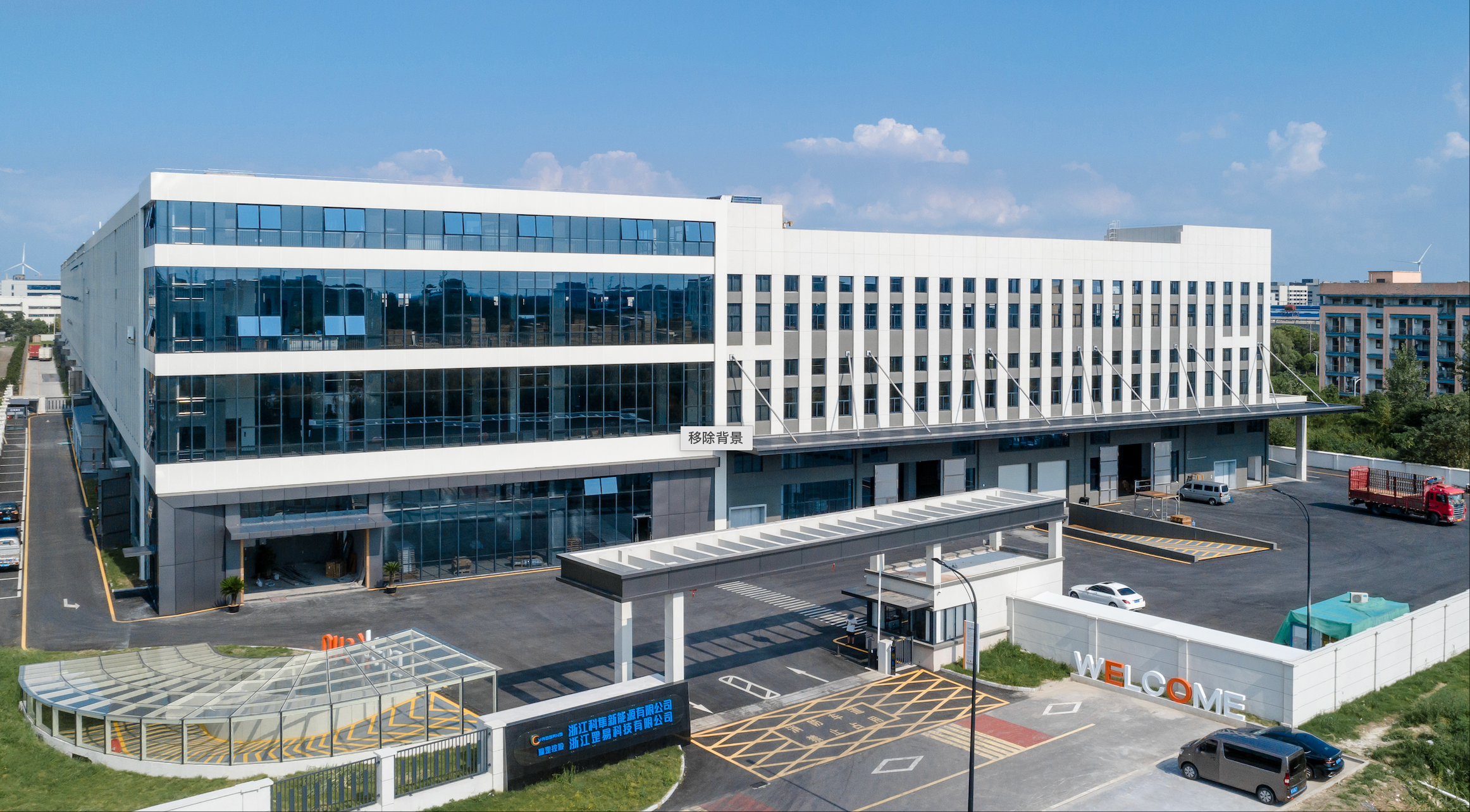
Kesun Solar (Zhejiang Kesun New Energy Co., Ltd.) supplies solar water heaters, buffer tanks, domestic hot water tanks and hybrid solar panels from a 42,000 m² facility with 300,000 sets of annual output and a 15-engineer R&D team. Send your room count, location and hot water demand profile for a configuration recommendation, or request samples and a project quotation.
Contact: Alan · alan@ensunchina.com · Tel/WhatsApp +86 135-8643-2400 · www.kesunsolar.com
Have Questions or Need More Details?
Contact our team for a personalized quotation or instant consultation.
Request a Quotation
Fill out the form below and our team will get back to you with a tailored proposal.
WhatsApp Direct Chat
Prefer to chat in real-time? Message us on WhatsApp for instant assistance & quick answers.
- Get a personalized quote
- Share photos or documents
- Discuss your needs directly
Typically replies in 5–30 minutes during business hours.