
OEM vs. ODM Solar Water Heaters for Hotels: An 80-Room Decision Guide
For an 80-room hotel, the OEM-versus-ODM decision is not about which route is technically better. It is about who owns the design. Under an OEM agreement, the solar hot water system is manufactured to the buyer's specification and carries the buyer's brand. Under an ODM agreement, the project starts from a manufacturer's existing, already-tested platform and is adapted to the site. Kesun Solar states a production mode of OEM, ODM and full customization, which means the useful question for a hotel buyer is narrower: how much of this system do you actually need to control, and how much can safely come from a proven platform?
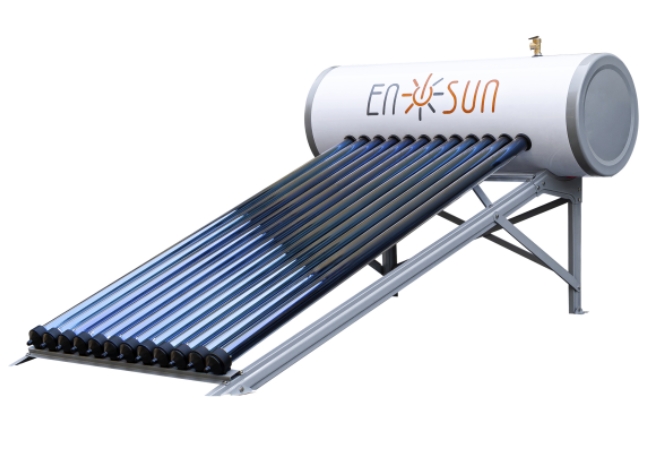
A pressurized solar water heater platform — the typical starting point for hotel domestic hot water projects.
The short version: choose OEM when the hotel group needs a proprietary specification, private-label documentation, or a configuration that does not exist yet on the supplier's shelf. Choose ODM when the priority is moving from decision to commissioning quickly on a configuration that has already been built and tested for commercial hot water duty. Both routes run on the same commercial terms at Kesun: a minimum order quantity of one 40-foot container and a typical lead time of 20–35 days.
Problem Definition: What an 80-Room Hotel Actually Has to Solve
An 80-room hotel is a continuous-demand building. Its solar hot water system has to deliver all-day domestic hot water for guest rooms and public bathing areas, support auxiliary regional heating, and replace traditional electric and gas heating equipment so that the daily heat demand of hotel operation is still met on low-irradiation days. That is the duty cycle, and it does not change depending on whether the system is sourced as OEM or ODM.
What changes is where the engineering decisions sit. A hotel project of this size normally has four constraint blocks that must be resolved before any supplier can quote accurately:
- Site and climate constraints. Solar thermal systems are designed for different climate zones, and the specific working condition parameters require project-level calculation. A coastal or hot-and-rainy location and a cold inland location will not use the same configuration.
- Material and water constraints. Special requirements typically include corrosion-resistant materials, water quality treatment, freeze protection for winter, and roof load-bearing capacity.
- System architecture. The system can operate in direct or indirect circulation mode, via passive thermosiphon or forced circulation with pumps, and can support electric backup or heat pump linkage. Supporting equipment such as circulation pumps, controllers, valves, mounting frames and piping accessories has to be defined with the system.
- Ownership and branding. Who is named on the technical documentation, the nameplate and the warranty — the hotel group, the installer, or the manufacturer.
The OEM/ODM fork appears at the third and fourth blocks. If your constraints are largely site-driven, an existing commercial platform usually absorbs them. If your constraints are driven by a corporate standard, a brand identity, or a specification written before the site was chosen, you are describing OEM work.
Industry Background: Why the OEM/ODM Question Is Growing
Global demand for solar water heating remains substantial, and the commercial segment is where configuration decisions matter most. Fortune Business Insights valued the global solar water heater market at USD 4.2 billion in 2025. Installed base data from the IEA Solar Heating & Cooling Programme puts cumulative global solar heat capacity at 560 GWth by the end of 2023, covering 800 million m² of collector area. The scale of that installed base is the reason proven platforms exist at all: hotel buyers are rarely specifying a system nobody has built before.
Technology mix is also relevant to hotel procurement. Grand View Research reported that evacuated tube collector technology led the market with a 44.2% revenue share in 2023. The 58-1800 vacuum tube with heat pipe, used across Kesun's HSC collectors and CPS-series heaters, sits inside that mainstream. For an 80-room project, that matters commercially: mainstream collector technology means spare parts, service knowledge and comparable quotations are easier to obtain.
Two regulatory and trade signals are worth checking early, because they can narrow the OEM/ODM choice before technical discussion starts:
- Customs classification. HS code 841912 was introduced to differentiate solar water heaters from the generic 841919 code, which affects how a hotel project's equipment is declared on import.
- Destination-market regulation. New U.S. Federal energy conservation standards for consumer water heaters became effective on July 5, 2024, with compliance required by 2029 under the EPCA / DOE consumer water heater standards. Projects in that market should confirm the applicable standard before locking a specification.
On the manufacturing side, Zhejiang Kesun New Energy Co., Ltd. — trading as Kesun Solar — is a solar water heater and thermal system manufacturer based in Haining, Zhejiang, China, formed through the merger of Haining Ensun Solar Technology Co., Ltd. and Zhejiang Yile New Energy Co., Ltd. The company operates a 42,000 m² manufacturing facility with 130 employees, including a 15-engineer R&D team, states an annual output of 300,000 sets, and exports approximately 60% of production, with main markets including Mexico, the EU and Africa. A verified supplier profile published on Alibaba reports Kesun's 2025 export revenue at approximately USD 19.6 million.
Detailed Solution: What OEM and ODM Actually Cover at Kesun
Kesun's stated production mode is OEM, ODM and customizable manufacturing, with customization supported by capacity, type and system configuration — covering residential and commercial applications, different tank capacities, and collector type combinations. That defines the practical boundary between the two routes:
- ODM means the project is built from one of the existing platforms below, adapted to the site. Tank capacity, collector type and system configuration are selected from the established range.
- OEM means the buyer's specification drives the build — material, design and configuration can be customized, and the resulting unit carries the buyer's requirements.
The manufacturing terms are identical for both routes. Kesun states a monthly capacity of 25,000 units, a typical lead time of 20–35 days, a minimum order quantity of one 40-foot container, 100% testing on production, global export markets, and remote after-sales support.
The six platforms an 80-room hotel will be quoted against
These are the platforms that a hotel buyer chooses between before deciding whether OEM work is needed at all.
| Platform | Type | Key specifications | Hotel / commercial fit |
|---|---|---|---|
| HSC series | Solar collector | 10 to 30 tubes; 58-1800 vacuum tube with heat pipe; aluminium alloy frame | Villa, hotel, house heating, spa centre, school |
| CPS series | High-pressure solar geyser | 100L to 300L; max operating pressure 6 bar; test pressure 9 bar; 58-1800 vacuum tube with heat pipe; 50 mm PU foam insulation; 25–45° angle; SS304 / SS316 / Duplex 2205 / Duplex 32001 | House, villa, garden, gas station, car wash centre, small hotel, school |
| CPS-FJ series | Indirect solar water heater | 150L, 200L, 250L, 300L; flat type solar collector; SPCC with enamel coating; indirect enamel-coated tank for salty water; compatible with anti-freezing heat transfer media | Villa, house, hotel, school |
| CNP series | Non-pressure solar water heater | 60L to 500L; 58-1800 vacuum tube absorber; 50 mm PU foam; 25–45° angle; SS304 / SS316 | House, villa, garden, gas station, car wash centre, small hotel, school |
| FPC2.0 | Flat plate solar collector | 1 m², 1.5 m², 2 m², 2.5 m²; 80 mm thickness; copper and aluminium alloy | Swimming pool, housing heating, solar water heater |
| PV Series | PV solar water heater | 100L to 500L; 600 W/pc input from solar panel; 800 W to 3500 W heating output; MPPT controller; DC/AC automatic switch; Duplex 2205 / Inox 316L | Villa, house, apartment, camp |
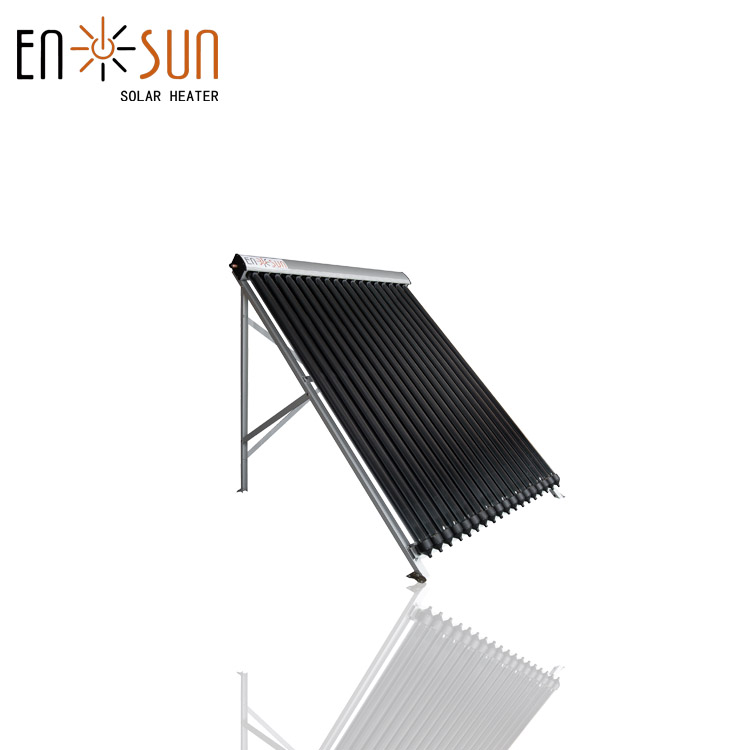
HSC series heat pipe collector: 58-1800 vacuum tubes, 10 to 30 tubes per unit.
For an 80-room hotel, the two routes converge most often on the CPS series or the CPS-FJ indirect series, with HSC series collectors supplying heat. The CPS-FJ indirect design matters where water quality or freezing is a concern, because the enamel-coated indirect tank is designed for salty water and can work with anti-freezing heat transfer media. Where the site has a strong PV strategy, the PV Series adds a solar-electric option with an MPPT controller and automatic DC/AC switching.
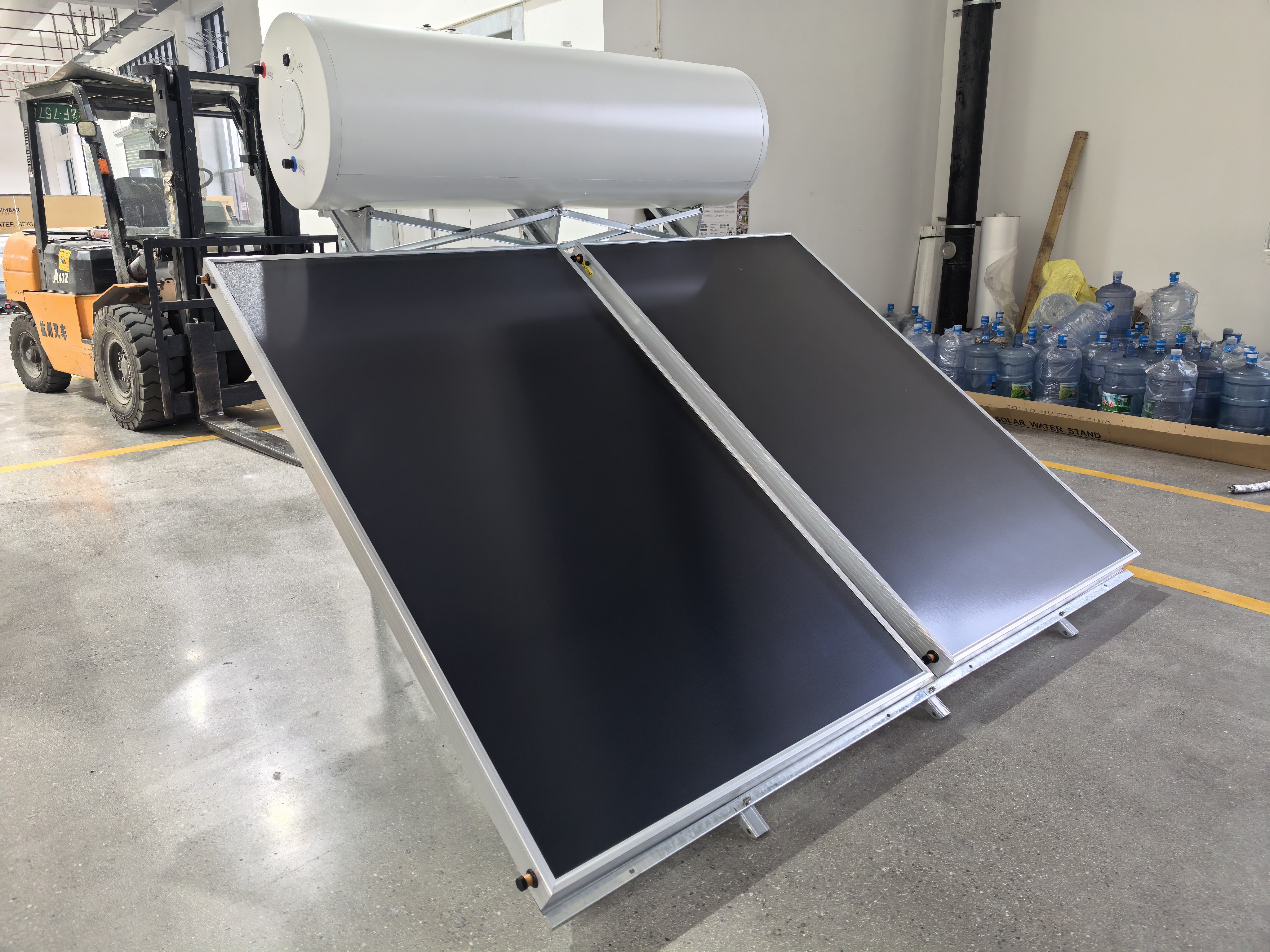
CPS-FJ indirect solar water heater — an enamel-coated tank option for salty water and anti-freeze conditions.
Step-by-Step Breakdown: Choosing Between OEM and ODM
The sequence below reflects the order in which the decision actually locks. Skipping step 2 is the most common reason a hotel project ends up paying for OEM work it did not need.
Step 1 — Quantify the duty
Define daily hot water demand for 80 guest rooms plus public bathing areas, and state whether auxiliary regional heating is required. The reference case behind this guide is a complete solar hot water system serving daily water supply for 80 guest rooms, with support for auxiliary regional heating.
Step 2 — Separate proprietary requirements from site requirements
Write two lists. List A contains requirements that exist because of corporate standard or brand identity — for example a mandated tank material, a mandated control interface, or private-label documentation. List B contains requirements driven by the site — climate, water quality, roof load, freeze risk, available collector area. List B is normally satisfied by adapting an existing platform. List A is what pushes you toward OEM.
Step 3 — Map your specification onto the six platforms
Check whether a platform already exists that meets List A and List B. Customization at Kesun covers capacity, type and system configuration, including different tank capacities and collector type combinations. If your requirement is a selection within that range, it is a configuration, not an OEM project.
Step 4 — Confirm certification coverage for the destination market
Confirm which certificate set applies to the platform you selected and whether it matches the destination market. Kesun states Solar Keymark certification across the HSC, CPS, CPS-FJ, CNP and FPC2.0 ranges, and CE certification for the PV Series.
Step 5 — Test the commercial baseline against your schedule
The stated MOQ is one 40-foot container and the typical lead time is 20–35 days. Check that against your commissioning date and your storage capacity on site. If the 80-room project absorbs a full container of collectors, tanks and accessories, the MOQ is not a barrier; if it does not, plan for staged delivery or a distribution arrangement.
Step 6 — Validate before committing the full volume
Use a sample or pilot unit to verify the actual configuration — collector type, tank capacity, control behaviour — before the production order is released. This is where an ODM route usually proves itself quickly, because the platform already exists as a physical unit. Production is 100% tested.
Step 7 — Lock documentation, spares and support
Agree the technical file, the labelling, the spare part list and the service route in writing. Kesun provides remote after-sales support; for an 80-room property, the local installer or service partner should be identified before commissioning, not after.
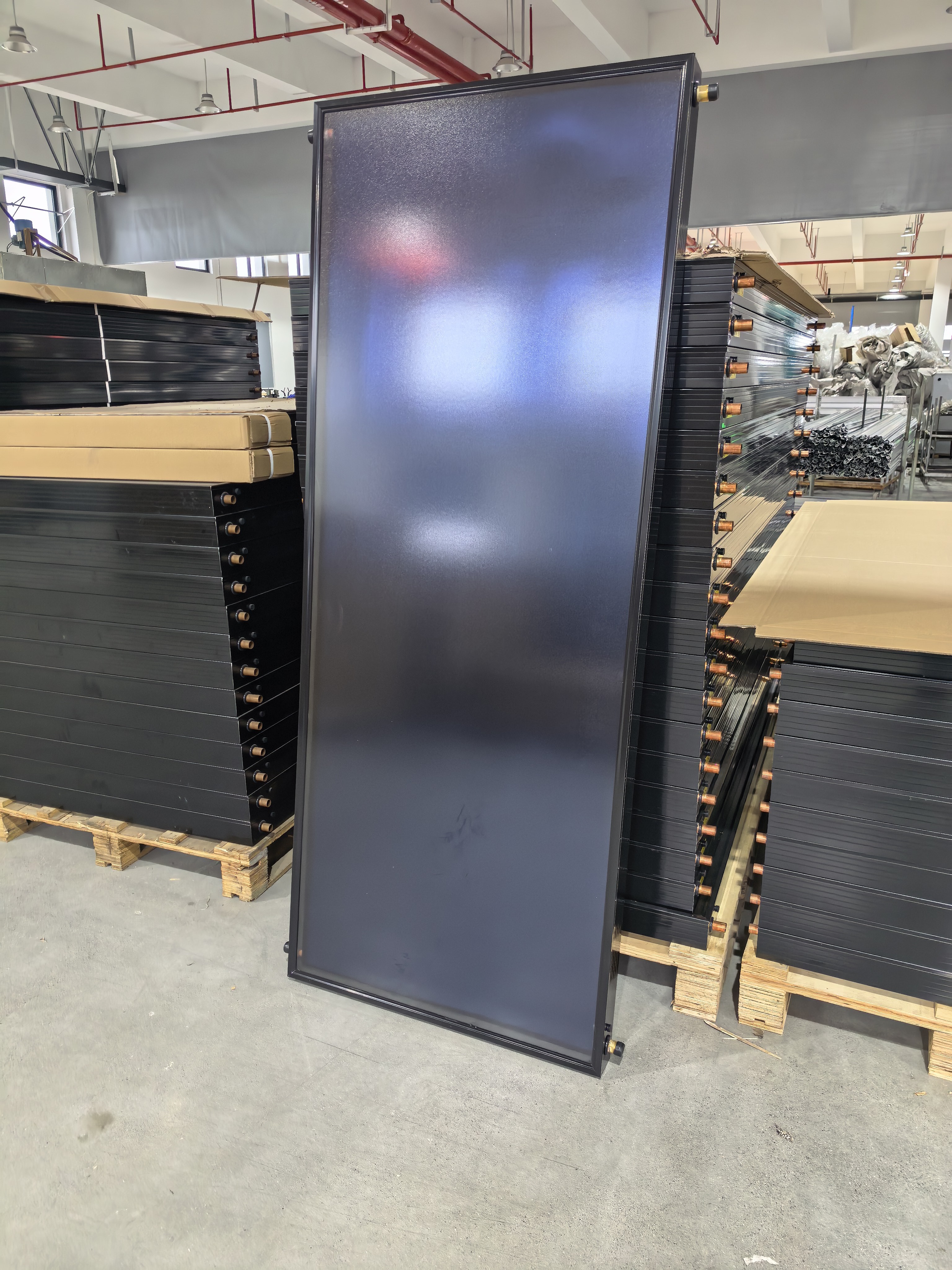
FPC2.0 flat plate collector — 1 m² to 2.5 m², 80 mm thickness, for pool heating and commercial hot water.
Use Cases: Where the Decision Lands in Practice
Case: an 80-room hotel in Southeast Asia
A commercial hotel purchaser in Southeast Asia installed a complete solar hot water system for a small-to-medium hotel serving 80 guest rooms. The system provides all-day domestic hot water for guest rooms and public bathing areas and supports auxiliary regional heating, replacing traditional electric and gas heating equipment. Reported outcomes: electricity and gas costs fell by more than 40%, the system delivers constant-temperature hot water with minimal failures, and the stated stable service life is more than 15 years. The configuration uses high-adaptability vacuum heat collection modules with corrosion and weather resistance for the region's hot-and-rainy climate, an integrated design for easier installation and lower-cost maintenance, and smart temperature adjustment aimed at small-to-medium commercial projects.
Read against the OEM/ODM decision, this case is an ODM-shaped project: the requirements were site-driven and performance-driven, not brand-specification-driven. Cost reduction, reliability and service life were the acceptance criteria.
Where OEM is the better fit
- Hotel groups running a multi-property standard that specifies tank material, collector type or control logic across all sites.
- Operators that need the system delivered under their own brand, with their own documentation and warranty structure.
- Developers combining solar thermal with a heat pump or PV strategy where the interface between systems must follow an in-house specification.
Where ODM is the better fit
- Single-property hotels and resorts where the priority is commissioning date and predictable operating cost.
- Projects in hot-and-rainy or coastal climates where a proven corrosion-resistant vacuum tube configuration already exists.
- Villa, apartment, spa centre, school, gas station and car wash applications where demand profiles are similar and an established platform covers them.
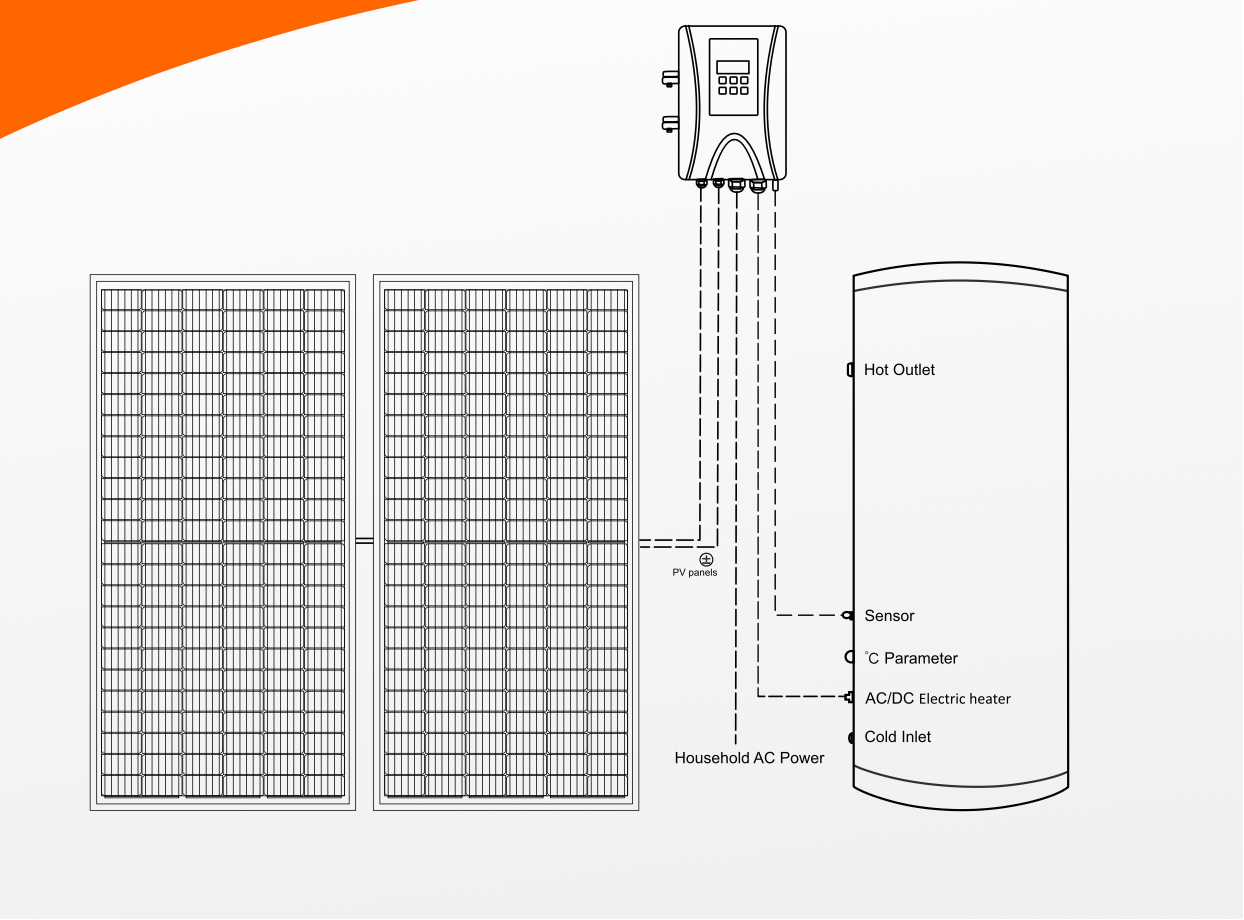
PV Series hybrid solar water heater — MPPT control and automatic DC/AC switching for sites with a PV strategy.
Comparison Table: OEM vs. ODM for an 80-Room Hotel
| Decision dimension | OEM route | ODM route |
|---|---|---|
| Starting point | Buyer's specification and requirements | Kesun's existing platform — HSC, CPS, CPS-FJ, CNP, FPC2.0 or PV Series |
| Design ownership | Buyer defines material, design and configuration | Manufacturer platform; buyer adapts within the range |
| Customization scope | Customization by capacity, type and system configuration, including material and design | Selection of tank capacity, collector type and system configuration from the established range |
| Branding and labelling | Buyer's brand and documentation requirements | Project-specific labelling onto a standard platform |
| Certification reference | Confirm the applicable certificate set for the built configuration and destination market | Solar Keymark on HSC, CPS, CPS-FJ, CNP and FPC2.0; CE on PV Series |
| Minimum order quantity | 1 × 40 ft container (same for both routes) | |
| Typical lead time | 20–35 days (same for both routes) | |
| Quality control | 100% test (same for both routes) | |
| Typical buyer | Hotel group, brand owner, or developer with a fixed specification | Single-property hotel, resort, or operator prioritising schedule and operating cost |
| Main review point before ordering | Confirm change control, material specification and documentation ownership in writing | Confirm the platform's standard configuration genuinely covers your site constraints |
Frequently Asked Questions
What certifications apply to OEM and ODM solar water heaters for a hotel project?
Certification is tied to the platform and the destination market, not to whether the order is OEM or ODM. Kesun states Solar Keymark certification across the HSC solar collector, CPS high-pressure solar geyser, CPS-FJ indirect solar water heater, CNP non-pressure solar water heater and FPC2.0 flat plate collector ranges, and CE certification for the PV Series PV solar water heater. On the trade side, HS code 841912 was introduced specifically to differentiate solar water heaters from the generic 841919 code, so import documentation should use the correct classification. Projects destined for the United States should also check the federal energy conservation standards for consumer water heaters, effective July 5, 2024 with compliance required by 2029. Under an OEM order where the buyer specifies a non-standard build, the buyer should confirm in writing which certificates still apply to the resulting configuration.
Which solar water heater and collector configurations can be customized for hotel and residential DHW projects?
Kesun's stated production mode is OEM, ODM and customizable, with customization supported by capacity, type and system configuration — covering residential and commercial applications, different tank capacities, and collector type combinations. In practice this covers the CPS high-pressure range from 100L to 300L, the CPS-FJ indirect range at 150L, 200L, 250L and 300L with flat type collectors, the CNP non-pressure range from 60L to 500L, HSC collectors from 10 to 30 tubes using 58-1800 vacuum tubes with heat pipes, FPC2.0 flat plate collectors from 1 m² to 2.5 m², and the PV Series from 100L to 500L. HSC series collectors are matched with CPS-FJ and CPS series pressurized solar water heaters for stable large-volume domestic hot water in hotel and commercial buildings, and the same platforms scale down to residential DHW, villa and school applications. Buyers should note that system operating parameters are calculated at project level, since working conditions differ by climate zone.
Is OEM more expensive than ODM for an 80-room hotel?
Cost is driven by how far the build departs from an existing platform, how much design and documentation work the buyer requires, and the order volume. Kesun notes good cost control achieved through efficient production and large-scale production, and states a monthly capacity of 25,000 units. For an 80-room hotel, the volume baseline is the same under both routes — a minimum order quantity of one 40-foot container. The practical cost comparison therefore comes down to whether your non-negotiable requirements can be met by configuring an existing platform or require a specification-driven OEM build. The correct step is to submit the project's requirement list for a quotation rather than assume one route is cheaper.
Can a sample or pilot unit be validated before the full container order?
Yes — validation before a full production release is the recommended sequence for any 80-room project, and it matters more on the OEM route because the configuration does not yet exist as a physical unit. The stated minimum order quantity is one 40-foot container, so a sample or pilot arrangement should be discussed and confirmed alongside the project quotation rather than assumed. Production runs are 100% tested, which means the sample mainly validates fit, capacity selection and control behaviour at your site, not whether the units will work. Buyers can request a sample or project quote directly from Kesun to start this step.
What is the typical lead time for OEM and ODM solar water heater orders?
Kesun states a typical lead time of 20–35 days for both OEM and ODM orders, supported by a monthly production capacity of 25,000 units. Two factors determine where in that range a specific hotel project lands: whether the build uses an existing platform configuration or requires specification-driven OEM work, and whether the shipment is a single 40-foot container or part of a larger staged delivery. After-sales support is provided remotely, so projects should also plan the local installation and service partner before the delivery window opens, particularly where the site requires freeze protection, water quality treatment or specific roof load-bearing arrangements.
Conclusion: Decide Ownership First, Then Choose the Route
The OEM-versus-ODM question for an 80-room hotel resolves once you know whether your requirements come from your own standard or from the site. Site-driven requirements — climate, water quality, freeze risk, roof load, cost targets — are almost always absorbed by an existing platform such as the CPS, CPS-FJ or CNP series with HSC collectors, delivered as an ODM project with a stated lead time of 20–35 days and a one-container minimum order. Specification-driven requirements — proprietary materials, mandated control interfaces, private-label documentation — belong on the OEM route, where capacity, type and system configuration can be customized.
The evidence from the Southeast Asian hotel case suggests the performance ceiling is not set by which route you choose. That project delivered all-day domestic hot water for 80 guest rooms and public bathing areas, cut electricity and gas costs by more than 40%, and is stated to deliver a stable service life of more than 15 years — on a configuration built around proven vacuum heat collection modules. What the comparison should change is your procurement sequence, not your performance target.
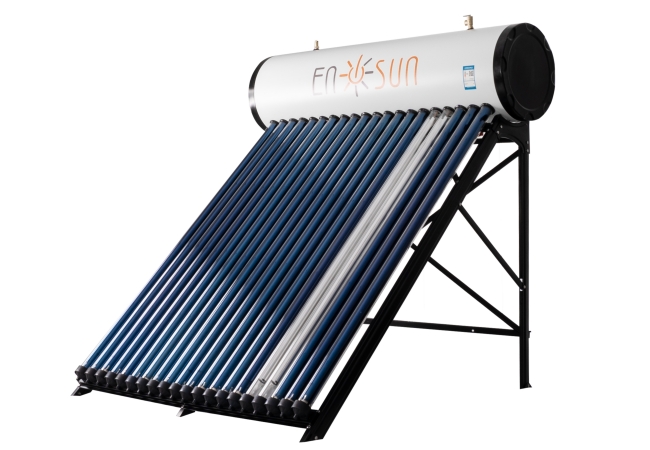
Confirm the platform, then validate the configuration before releasing a full container order.
Next step for your 80-room project
Zhejiang Kesun New Energy Co., Ltd. (Kesun Solar) manufactures solar water heaters, solar collectors, buffer tanks, domestic hot water tanks and hybrid solar panels at its 42,000 m² facility in Haining, Zhejiang, China, with OEM, ODM and full customization available.
Send your hotel project requirement list — room count, tank capacity preference, collector type, destination market — and request a configuration recommendation, sample arrangement or project quotation.
Contact: Alan | Email: alan@ensunchina.com | Tel / WhatsApp: +86 135-8643-2400
Website: www.kesunsolar.com
Download the full product catalogue: ENSUN 2025 catalogue (PDF)
Have Questions or Need More Details?
Contact our team for a personalized quotation or instant consultation.
Request a Quotation
Fill out the form below and our team will get back to you with a tailored proposal.
WhatsApp Direct Chat
Prefer to chat in real-time? Message us on WhatsApp for instant assistance & quick answers.
- Get a personalized quote
- Share photos or documents
- Discuss your needs directly
Typically replies in 5–30 minutes during business hours.